
Peter Obi Fires Back At Tinubu Presidency, Says Govt Dodging Failures By Focusing On ‘Charade’ Elections
24th June, 2026 | News
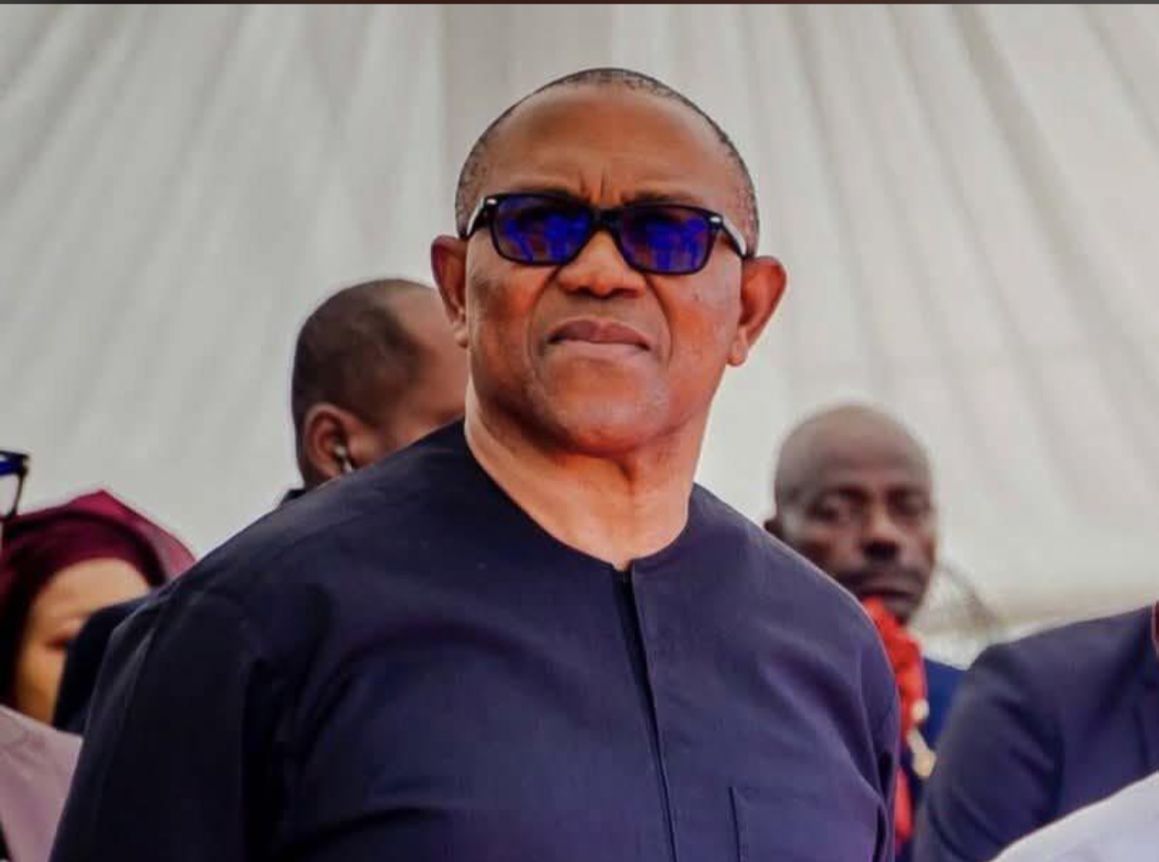
Peter Obi’s Media Office Accuses Presidency of Dodging Accountability Concerns
The media office of Nigerian Democratic Congress (NDC) presidential candidate, Peter Obi, has accused President Bola Tinubu’s administration of avoiding critical questions about governance and accountability by focusing on what it described as the “charade election” conducted on Saturday.
In a statement issued on Wednesday, the Obi Media Office said the former Anambra State governor’s recent call for President Tinubu to resign was driven by concerns over worsening poverty, insecurity, and economic hardship in Nigeria. It alleged that rather than address those issues, the Presidency chose to attack Obi and divert attention to unrelated matters.
According to the statement, the government’s response concentrated on defending the outcome of the recent election and debating constitutional differences between presidential and parliamentary systems, while ignoring the core issues raised by Obi.
“The innocuous call by the presidential candidate of the Nigeria Democratic Congress (NDC), Peter Obi, on President Bola Ahmed Tinubu to resign from office, having failed to improve the living conditions of Nigerians in recent years, has generated a lengthy reaction from his media aides but has failed to address the issue,” the statement said.
The media office explained that Obi’s remarks were inspired by the resignation of the British Prime Minister, who stepped down after acknowledging public dissatisfaction with economic conditions and the government’s inability to fulfil key promises.
“Our principal’s call was for President Bola Tinubu to learn a lesson from the action of the British Prime Minister, who chose to resign after acknowledging that his government had failed to sufficiently improve the living conditions of its citizens,” it stated.
The statement stressed that Obi’s comments were not focused on the type of political system Nigeria operates but on the principle of leadership accountability.
“Rather than address the issue of leadership and accountability, the presidency embarked on shadow chasing, talking about the weekend’s charade election and the types of government, whether presidential or parliamentary,” the statement said.
“We would like to state clearly that our principal’s comments were not about whether Nigeria operates a presidential or parliamentary system. They were about a fundamental principle of leadership: accepting responsibility for outcomes.”
To support its argument, the media office cited examples of leaders who resigned under pressure despite operating within presidential systems, including former United States President Richard Nixon, former Brazilian President Fernando Collor de Mello, former Peruvian President Pedro Pablo Kuczynski, and former Argentine President Fernando de la Rúa.
It also recalled that President Tinubu, while in opposition, repeatedly called for the resignation of former President Goodluck Jonathan during the fuel subsidy protests and following the abduction of the Chibok schoolgirls, despite Nigeria operating the same presidential system at the time.
“Leadership standards should not change depending on who occupies the office,” the statement added.
The Obi Media Office further claimed that poverty levels had worsened significantly under the current administration, alleging that the number of Nigerians living below the poverty line had increased from about 87 million when Tinubu assumed office to approximately 140 million.
“The debt burden accumulated under this administration is unprecedented, yet it has not been matched by a corresponding improvement in the lives of ordinary citizens,” it stated.
The statement also highlighted economic challenges facing businesses and households, arguing that many companies are struggling with rising operational costs while consumers face declining purchasing power.
“No amount of political rhetoric and grandstanding can conceal the fact that millions of Nigerians are enduring unprecedented economic hardship,” it said.
On security, the media office acknowledged some successes recorded by security agencies but maintained that insecurity remains widespread across the country.
“Kidnapping, banditry, violent crime, and attacks on communities have become national concerns rather than regional challenges,” it noted.
The statement also criticised the Presidency’s emphasis on economic indicators such as GDP growth, increased government revenue, and stock market performance, arguing that such metrics are meaningless if they do not improve the daily lives of citizens.
“Economic growth that does not translate into improved living standards is merely statistical growth. The true measure of economic success is not the performance of the stock market but the well-being of the average citizen,” it said.
Responding to claims that the outcome of Saturday’s election reflected public support for the administration, the media office rejected that argument, describing the election as deeply flawed.
“The presidency cites the outcome of the weekend elections as evidence of public endorsement of its performance. Nothing could be further from the truth,” the statement said.
“It is disheartening that what many Nigerians viewed as a deeply flawed electoral exercise is now being presented as proof of good governance.”
The statement warned that if the conduct of the election becomes the standard for future electoral exercises, Nigeria’s democracy could face serious challenges.
It also questioned government spending priorities, noting that approximately ₦298 billion was allocated to primary healthcare, while about ₦873 billion was budgeted for elections.
“Such a situation demands urgent national reflection,” it stated.
Reaffirming Obi’s position, the media office insisted that his call for Tinubu’s resignation was not driven by personal animosity or political calculations but by a desire to promote accountability in public office.
“Obi did not call for resignation out of malice or political calculation. He sought to draw attention to a leadership culture that must evolve if Nigeria is to make meaningful progress,” the statement said.
The media office concluded by urging the government to focus on tackling poverty, insecurity, unemployment, power shortages, and declining productivity rather than attacking critics.
“Nigeria deserves leadership that listens more than it lectures, serves more than it celebrates itself, and accepts responsibility rather than constantly searching for excuses,” the statement added.