
EFCC Recovers N1.23trn, $684m, Secures 10,872 Convictions In Three Years
1st September, 2026 | News
EFCC Recovers ₦1.23tn, $684m, Secures 10,872 Convictions in Three Years
The Economic and Financial Crimes Commission (EFCC) says it recovered more than ₦1.23 trillion, $684.48 million, £373,905.78 and €9.34 million, among other currencies, between October 2023 and June 2026.
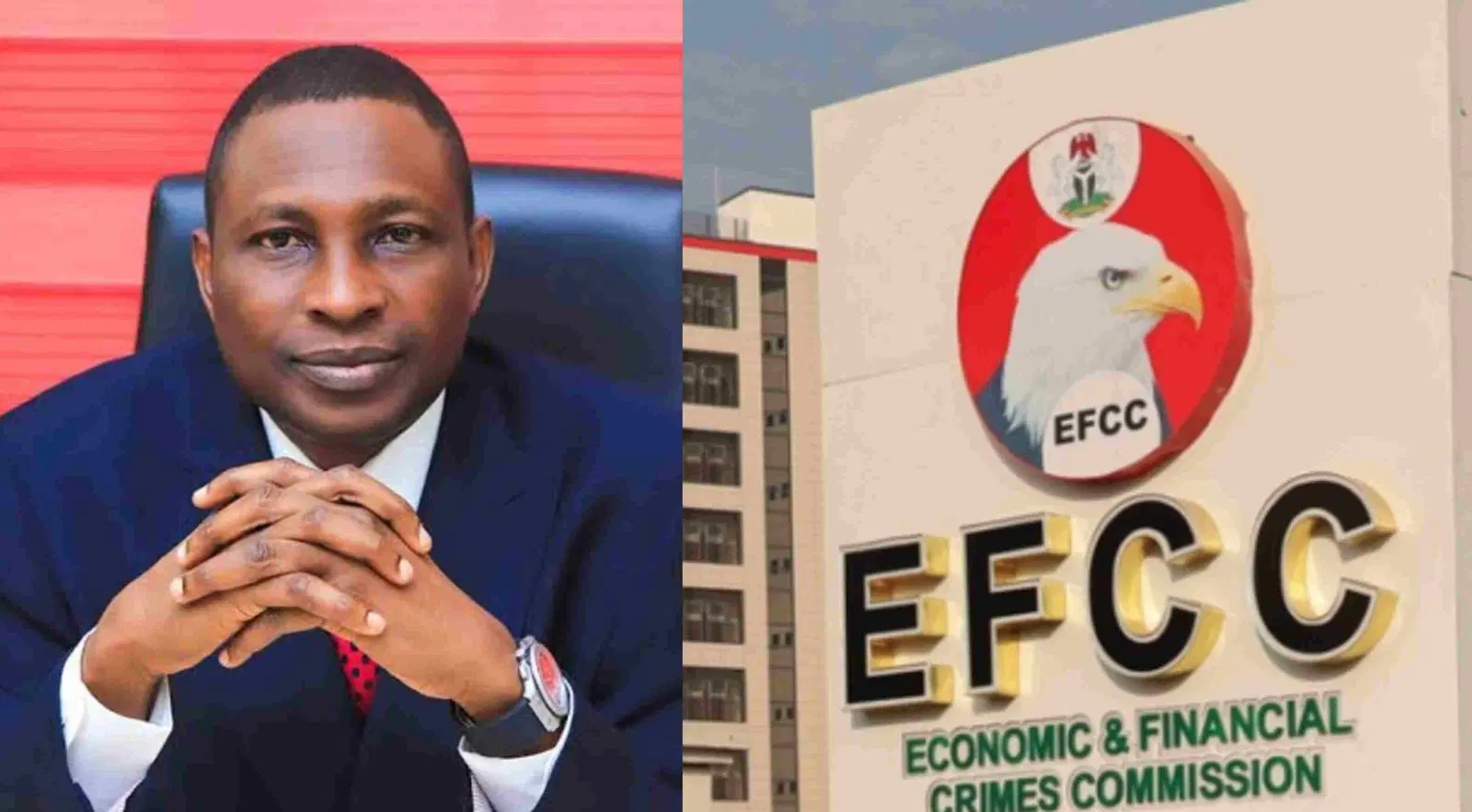
EFCC Chairman, Ola Olukoyede, disclosed this on Monday during a media briefing to mark three years of his administration at the commission.
Olukoyede attributed the achievements to the commitment of EFCC personnel and the commission’s renewed focus on combating economic and financial crimes, recovering illicit assets and ensuring that recovered funds are returned to their rightful beneficiaries.
According to him, about ₦397.26 billion, representing 33 per cent of the naira recoveries, was recovered directly for the Federal Government, while approximately ₦836.34 billion, or 67 per cent, was recovered on behalf of ministries, departments and agencies, state revenue services, companies, individuals and foreign victims.
The EFCC chairman said the commission had released ₦661.32 billion and $492.37 million to beneficiaries during the period. He explained that the naira releases included funds paid directly to individuals and corporate organisations, as well as amounts released to government agencies and state revenue authorities.
Federal and state tax recoveries accounted for about ₦288.1 billion, comprising approximately ₦173.2 billion recovered for the Federal Government and ₦114.9 billion for state internal revenue services. Another ₦257.2 billion was recovered for federal government agencies.
Olukoyede stressed that asset recovery should go beyond confiscating proceeds of crime, saying its real value lies in returning recovered resources to the public and legitimate beneficiaries.
He also highlighted the use of recovered funds for national development. According to him, ₦50 billion each was allocated from recovered proceeds to the Nigerian Education Loan Fund (NELFUND) and the Nigerian Consumer Credit Corporation.
A recovered property, NOK University in Kachia, Kaduna State, was also converted into the Federal University of Applied Sciences, Kachia. The institution reportedly matriculated 1,909 students in December 2025.
Beyond financial recoveries, the EFCC secured the forfeiture of 10,053 tangible assets through interim and final court orders between October 2023 and July 2026.
The forfeited assets included 8,198 electronic devices, 1,177 real estate properties, 370 vehicles and 251 plots of land, alongside schools, factories, hotels, shops, oil rigs, barges, machinery and aircraft.
The commission also recorded the forfeiture of 102 tonnes of solid minerals, with proceeds from the disposal of assets under final forfeiture orders amounting to approximately ₦12.07 billion, which was paid to the Federal Government.
On prosecution, Olukoyede said the EFCC received 49,673 petitions, investigated 39,615 cases, filed 14,476 cases in court and secured 10,872 convictions within the period under review.
He said the figures represented a conviction-to-filing ratio of 75.1 per cent. In the first half of 2026 alone, the commission secured 1,370 convictions from 1,889 cases filed.
The EFCC boss noted that financial crimes were evolving, with advance-fee fraud and cybercrime accounting for nearly two-thirds of 46,288 offences recorded across nine major categories between 2024 and 2026.
He said the number of recorded offences increased by 24.1 per cent between 2024 and 2025, with significant increases in procurement fraud, bank fraud, cybercrime and economic-governance offences.
Olukoyede further disclosed that the commission had continued prosecuting high-profile cases involving former governors, ministers, public officials, agency heads, financial-sector operators and corporate executives.
He cited convictions involving Saleh Mamman, Robert Orya and Chukwunyere Nwabuoku, reiterating the EFCC’s position that no individual or public office holder is beyond the reach of the law.
The commission also handled 920 specialised cases involving money laundering, unlicensed bureaux de change, illegal mining, virtual assets and terrorist financing, securing 212 convictions. Within the period, 234 bureaux de change cases were recorded, resulting in 73 convictions.
According to Olukoyede, the EFCC’s enforcement efforts contributed to Nigeria’s removal from the Financial Action Task Force (FATF) grey list in October 2025, which he described as a major national achievement.
He credited the commission’s progress to cooperation with domestic and international agencies, including the US Federal Bureau of Investigation (FBI), UK National Crime Agency, Royal Canadian Mounted Police and INTERPOL.
The EFCC chairman also said the commission was investing heavily in technology, revealing that nearly 60 per cent of its processes and operations had been digitalised.
He identified continued investment in innovation and digitalisation, the new EFCC Academy, the EFCC 24/7 Cybercrime Rapid Response Centre (E-C2R2) and EFCC Radio as part of the commission’s efforts to respond to increasingly sophisticated financial crimes.
While acknowledging the progress recorded over the past three years, Olukoyede said more work remained to be done.
He said the commission’s priorities going forward would include strengthening crime prevention, accelerating restitution, improving investigative technology and promoting professionalism while maintaining respect for due process.
He pledged that the EFCC would continue its fight against corruption and economic crime with greater determination and a focus on delivering measurable value to Nigerians.