
ECOWAS, UEMOA, CILSS Adopt Plan To Tackle West Africa’s Water Crisis
28th September, 2026 | News
ECOWAS, UEMOA, CILSS Adopt Regional Plan to Tackle West Africa’s Water Crisis
West African countries and regional institutions have adopted a new framework to strengthen water governance, climate resilience and cooperation over shared water resources across the region.
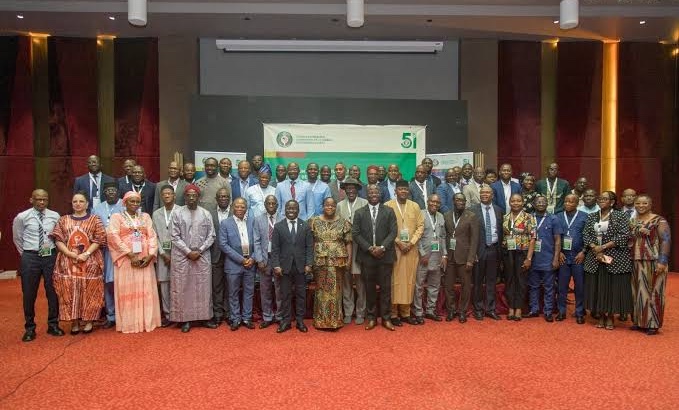
The agreement was reached at the inaugural West Africa Regional Water Forum (FREAO) held in Abidjan, Côte d’Ivoire, where governments and regional bodies discussed growing water insecurity, climate change, transboundary disputes and inadequate financing for water infrastructure.
The two-day forum, held from September 24 to 25 under the theme “Valuing Water to Transform West Africa,” was convened by the Economic Community of West African States (ECOWAS) in partnership with the West African Economic and Monetary Union (UEMOA) and the Permanent Interstate Committee for Drought Control in the Sahel (CILSS).
The meeting ended with the adoption of the Abidjan Declaration, a shared regional water roadmap, while Cabo Verde was selected to host the next edition of the forum.
West Africa Moves to Strengthen Water Cooperation
Opening the forum on behalf of the Ivorian government, Prime Minister Robert Beugré Mambé called for stronger cooperation in managing shared water resources.
He described water governance as a strategic political choice and an important pillar of regional stability.
Representing ECOWAS Commission President General Birame Diop, Commissioner Amin Amidu Sulemani described the gathering as a regional call to action to improve water security and strengthen resilience to climate-related pressures.
Participants examined Integrated Water Resources Management (IWRM), sustainable financing, climate resilience, water diplomacy and transboundary cooperation.
Shared Rivers Make Regional Cooperation Essential
Water management presents a particular challenge in West Africa because many major rivers and basins cross national borders.
The Niger, Senegal, Gambia and Volta river basins, for instance, serve communities and economies across several countries.
ECOWAS has stated that 28 shared river basins cover about 71 per cent of the region, highlighting the importance of coordinated management.
Activities such as dam construction, irrigation, industrial development and environmental degradation in one country can affect water availability and ecosystems in neighbouring countries.
The forum therefore placed significant emphasis on strengthening regional institutions and water diplomacy to help countries manage competing interests over shared resources.
Nigeria Faces Downstream Water Challenges
The issue is particularly relevant to Nigeria, which lies downstream within the Niger-Benue river system.
The Niger River originates outside Nigeria before flowing through the country and eventually reaching the Atlantic Ocean. As a result, developments involving water use, dams, irrigation and environmental conditions upstream can affect communities and economic activities downstream.
Improved cooperation among countries sharing the river system could therefore play an important role in managing water availability, agricultural production, environmental protection and other economic activities.
Climate Change Increasing Pressure on Water Resources
Climate change is adding another layer of pressure to West Africa’s water resources.
Changes in rainfall patterns, drought, flooding, desertification and environmental degradation are affecting communities across different parts of the region.
While prolonged dry periods can undermine agriculture and livestock production in the Sahel, heavy rainfall and flooding elsewhere can damage infrastructure, contaminate water sources and displace communities.
This creates a situation where some areas face water shortages while others experience destructive excess rainfall.
Participants at the Abidjan forum consequently placed climate resilience at the centre of the region’s water agenda.
Financing Remains a Major Challenge
Beyond policy commitments, financing remains one of the major challenges facing water security efforts in West Africa.
Governments have competing demands for limited public resources, while water infrastructure often requires substantial long-term investment.
The forum therefore highlighted the need to mobilise more domestic resources and strengthen partnerships with development institutions and the private sector.
Participants also stressed the importance of strengthening water institutions and improving the collection and sharing of reliable data on rainfall, river flows, groundwater, drought and water demand.
Such information is important for planning, managing floods, preparing for shortages and coordinating the use of shared water resources.
Water Security Linked to Food and Energy
The regional water agenda extends beyond access to drinking water.
Agriculture depends heavily on reliable water supplies, while energy production can also be affected by water availability. At the same time, poorly managed agricultural, industrial and domestic activities can pollute rivers and groundwater.
The Abidjan forum therefore promoted an integrated approach that considers the relationship between water, food security, energy, environmental protection and economic development.
The President of the African Ministers’ Council on Water (AMCOW) and Senegal’s Minister of Water and Sanitation, Dr Cheikh Tidiane Dièye, also linked the forum to Africa’s broader water agenda and preparations for the 2026 United Nations Water Conference.
Abidjan Declaration Faces Implementation Test
The adoption of the Abidjan Declaration provides a common political framework for addressing West Africa’s water challenges.
However, implementation will determine how far the commitments translate into practical results.
The regional agenda will require sustained cooperation among governments, adequate financing, stronger river-basin institutions and effective mechanisms for resolving disputes involving shared water resources.
The decision to institutionalise the regional water forum is expected to provide ECOWAS, UEMOA and CILSS with a platform for monitoring progress.
With Cabo Verde selected to host the next edition, attention will now turn towards translating the commitments made in Abidjan into concrete policies, infrastructure projects and financing mechanisms.
Ultimately, West Africa’s water challenge is closely connected to food security, energy, livelihoods, climate adaptation, environmental protection and regional stability.
As rivers, aquifers and watersheds cross national boundaries, stronger regional cooperation will remain central to managing one of the region’s most strategic resources.
SEO Keywords: West Africa water crisis, ECOWAS water governance, UEMOA, CILSS, Abidjan Declaration, West Africa Regional Water Forum, FREAO, Nigeria water resources, Niger River, transboundary water resources, climate resilience, water security in Africa, West Africa climate change, water financing, ECOWAS regional cooperation.