
Atiku Vows To Probe ₦33.75bn Cash 26: Transfers Citing Audit Report On 3.29m Beneficiaries
7th August, 2026 | News
Atiku Vows to Probe ₦33.75bn Cash Transfers After Audit Raises Questions
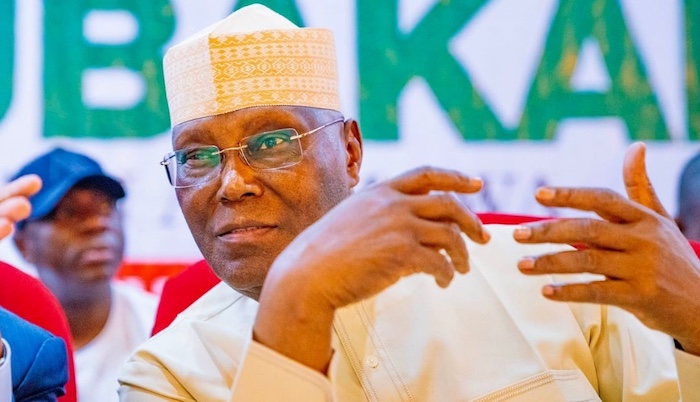
The presidential candidate of the African Democratic Congress (ADC), Atiku Abubakar, has vowed to set up an independent team of experts to investigate ₦33.75 billion reportedly disbursed to 3.29 million vulnerable Nigerian households following an audit report that raised questions about the payments.
Atiku, through his Senior Special Assistant on Public Communication, Phrank Shaibu, said the audit findings raised serious concerns over whether funds meant to support vulnerable Nigerians actually reached the intended beneficiaries.
He described the findings as a major indictment of the Federal Government, arguing that Nigerians have faced higher fuel, transportation, electricity and food costs while questions remain over the government’s social intervention programmes.
According to Atiku, ₦33.75 billion shared among 3.29 million households amounts to approximately ₦10,258 per household.
He questioned the adequacy of the intervention, arguing that even the relatively small amount reportedly allocated to beneficiaries had now come under audit scrutiny.
“This is beyond a bookkeeping scandal. The intervention is insultingly small, yet even that small amount cannot be cleanly accounted for,” Atiku said.
Atiku Questions Government’s Cash Transfer Figures
The former vice president also raised concerns over what he described as inconsistencies in the number of households said to have benefited from the government’s cash-transfer programme.
He noted that the government had reportedly claimed that more than ₦600 billion had been disbursed to over 10 million households, despite Nigerians previously being told that about 15 million households were targeted.
Atiku argued that government announcements alone were insufficient to establish that payments had actually reached beneficiaries.
“It now appears that the Tinubu’s administration cannot give Nigerians a coherent account of how many households actually benefited from its intervention programme,” he said.
He further cited audit concerns over ₦33.75 billion reportedly paid to 3.29 million beneficiaries, ₦36.74 billion in payments allegedly made without pre-payment audit and ₦4.62 billion for which payment vouchers were reportedly not produced.
Independent Investigation Planned
Atiku said his team would establish an independent group comprising financial, audit, technology and public-accounting experts to examine available records relating to the cash-transfer payments.
He said the proposed investigation would examine beneficiary figures, payment channels, reconciliation records, audit queries and other inconsistencies identified in the programme.
According to him, the team would also investigate available records associated with the payment process and determine whether the funds reached their intended beneficiaries.
“If beneficiaries received the money, there should be evidence. If access to records was obstructed, Nigerians deserve to know by whom and why,” Atiku said.
He argued that Nigerians should not be expected to rely solely on a government to investigate expenditure involving its own programmes where questions had already been raised.
Atiku Calls for Recovery and Prosecution Where Necessary
Atiku said the government should publish verifiable payment records if the beneficiaries were genuine.
He maintained that any funds found not to have reached their intended recipients should be recovered.
The ADC presidential candidate further said that if an investigation establishes that any public official diverted, misapplied or misappropriated funds intended for vulnerable Nigerians, such an official should face prosecution.
Atiku also argued that Nigeria’s response to poverty should go beyond cash transfers and temporary palliatives.
He advocated economic policies focused on increasing domestic production, supporting local refining, reducing energy costs and improving the purchasing power of ordinary Nigerians.
According to him, lower fuel and energy costs could help reduce transportation expenses and ease pressure on food prices and household budgets.
He maintained that greater transparency and accountability were necessary to ensure that social intervention funds appropriated in the name of vulnerable Nigerians actually reach them.