
Atiku, Obi Demand Probe Into IMF’s ₦8.83tn Off-Budget Spending Report
6th July, 2026 | News
Atiku, Obi Demand Accountability Over IMF Report on Alleged Unreported Government Spending
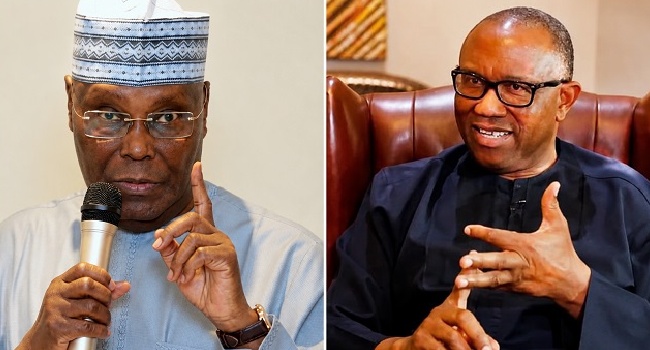
Former Vice President Atiku Abubakar and former Anambra State Governor Peter Obi have called for greater accountability and transparency following reports that the International Monetary Fund (IMF) identified significant public expenditures that were not reflected in Nigeria’s recent official budgets.
According to reports, IMF Resident Representative in Nigeria, Christian Ebeke, disclosed that government spending equivalent to about two per cent of Nigeria’s Gross Domestic Product (GDP) was not captured in official budget records. The expenditure was reportedly linked to major government projects executed outside the formal budget framework, raising concerns about fiscal transparency and the true size of the country’s fiscal deficit.
Reacting to the development, Atiku called on the Economic and Financial Crimes Commission (EFCC), the Independent Corrupt Practices and Other Related Offences Commission (ICPC), the National Assembly, and the Office of the Auditor-General of the Federation to investigate the matter.
The African Democratic Congress (ADC) presidential candidate estimated the unreported spending at approximately ₦8.8 trillion, describing it as public funds allegedly expended without adequate legislative approval, auditing, or public accountability.
According to Atiku, the reported findings suggest that large-scale government projects may have been executed outside the oversight mechanisms established by the National Assembly and existing procurement regulations. He urged lawmakers to immediately initiate a comprehensive investigation and called for an independent audit of all alleged off-budget expenditures.
Atiku also raised concerns over reports of deductions from statutory allocations due to state governments, urging authorities to provide full clarification on the matter.
Similarly, Peter Obi expressed concern over the reported expenditure, describing it as a serious issue that requires public explanation and accountability.
In a statement shared on social media, Obi argued that if the reported ₦8.83 trillion expenditure was indeed outside the approved budget framework, it would represent a significant gap in fiscal transparency. He noted that the amount exceeds allocations to several critical sectors and could have had a substantial impact on education, healthcare, and other developmental priorities if properly accounted for and deployed.
Obi further called for stronger financial discipline, transparency, and responsible management of public resources, urging Nigerians to continue demanding accountability from public institutions.
The IMF reportedly attributed the discrepancy largely to projects implemented outside the formal budget process. However, the organisation noted that the Federal Government has begun taking steps to address the issue through reforms aimed at strengthening budget laws, improving fiscal reporting systems, and enhancing transparency in public finance management.
The Federal Government has since disputed claims of missing funds, maintaining that the IMF’s comments have been misinterpreted and insisting that ongoing reforms are designed to improve accountability and fiscal governance.