
Tinubu Signs Controversial Electoral Bill Into Law Despite Protests
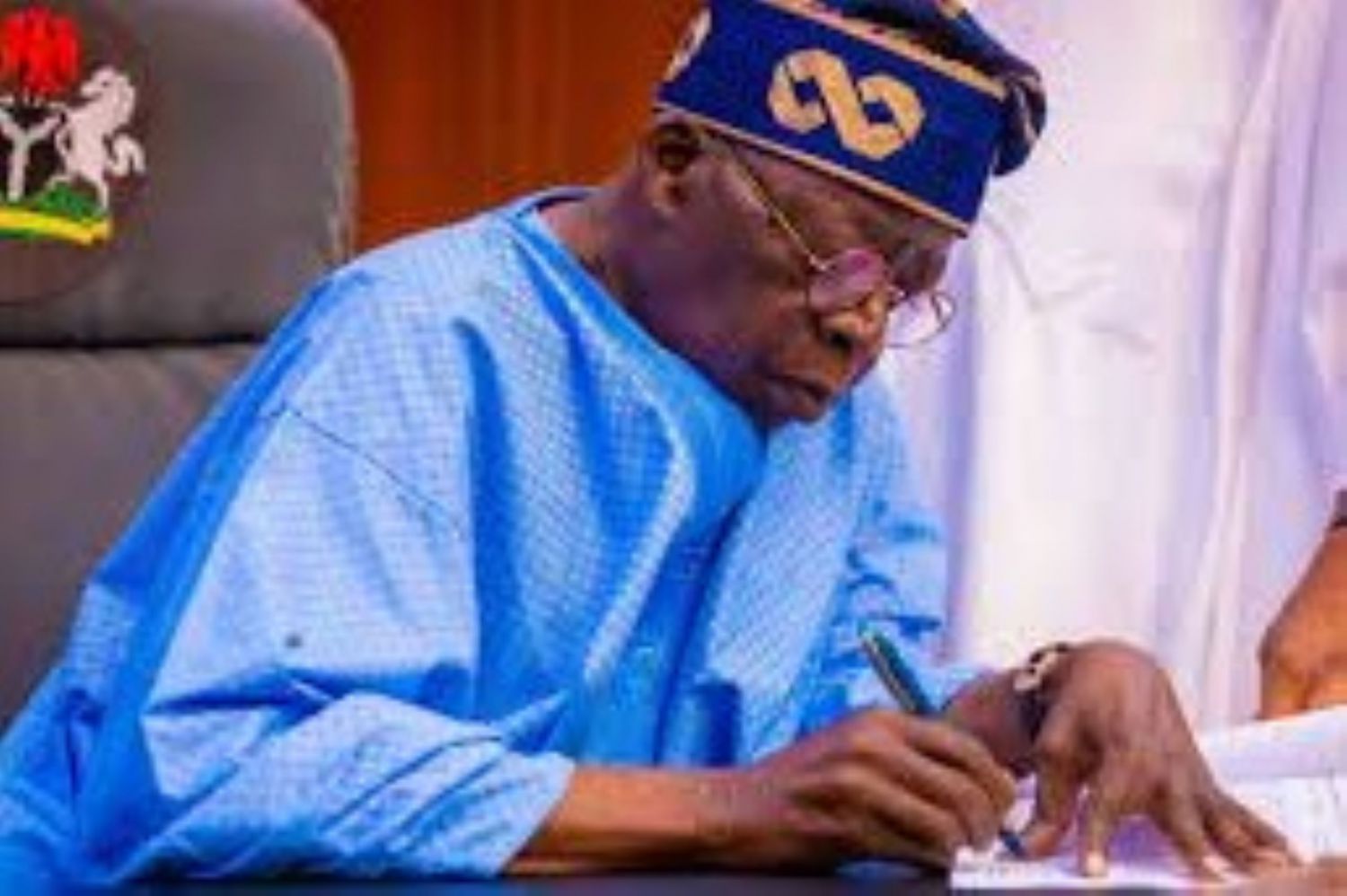
Tinubu Signs Electoral Act 2026 into Law Amid Protests and Legislative Drama
February 18, 2026
President Bola Ahmed Tinubu on Wednesday signed into law the Electoral Act, 2022 (Repeal and Re-Enactment) Bill 2026, following its passage by the National Assembly after months of intense deliberations, public scrutiny, and political debate across the country.
The signing comes amid protests in Abuja and heightened controversy over provisions relating to the electronic transmission of election results.
Senate Passes Bill After Heated Session
The Nigerian Senate passed the bill on Tuesday after hours of tense debate, procedural disputes, and sharp divisions over Clause 60, which addresses the electronic transmission of results.
Proceedings turned dramatic when Senator Enyinnaya Abaribe (ADC, Abia South) demanded a division on Clause 60, exposing deep divisions within the chamber over the future of electronic voting processes.
Senate President Godswill Akpabio initially indicated that the request for division had been withdrawn — a position strongly contested by opposition lawmakers.
Deputy Senate President Barau Jibrin cited Order 52(6) of the Senate Standing Orders, arguing that it would be procedurally improper to revisit a provision already ruled upon.
The disagreement escalated into a rowdy exchange, including a brief confrontation between senators on the chamber floor.
Senate Leader Opeyemi Bamidele clarified that a prior motion for rescission had nullified earlier decisions on the bill, making Abaribe’s demand procedurally valid.
Rising under Order 72(1), Abaribe specifically objected to Clause 60(3), which allows reliance on Form EC8A where electronic transmission fails. He proposed removing the provision permitting manual transmission in cases of network failure, arguing it could undermine electoral transparency.
During the division, 55 senators voted in favour of retaining the clause, while 15 opposed it, effectively preserving the provision.
Concerns Over 2027 Election Timing
Earlier, the Senate had rescinded its previous amendment to allow clause-by-clause reconsideration, citing technical inconsistencies and concerns regarding the scheduling of the 2027 general elections.
Bamidele explained that the move followed an announcement by the Independent National Electoral Commission fixing the 2027 general elections for February 2027 after consultations with National Assembly leadership.
Lawmakers noted that the proposed date could conflict with Clause 28, which mandates elections be held at least 360 days before the expiration of tenure. Concerns were also raised that elections falling during Ramadan could negatively impact voter turnout, logistics, and inclusiveness.
The Senate also identified discrepancies in multiple clauses and the bill’s Long Title, prompting its return to the Committee of the Whole for reconsideration.
House of Representatives Descends into Chaos
The controversy spilled into the House of Representatives, where opposition lawmakers staged a walkout during proceedings.
Speaker Tajudeen Abbas put forward a motion to rescind the House’s earlier approval of the bill, initially passed in December 2025. The motion was moved by Francis Waive, Chairman of the House Committee on Rules and Business.
When Abbas ruled that the “ayes” had carried the vote despite loud opposition, tensions escalated. Lawmakers accused the leadership of bias and procedural irregularities.
Deputy Speaker Benjamin Kalu was briefly prevented from continuing proceedings as protests intensified.
Efforts to calm the situation through an executive session failed, and aggrieved lawmakers eventually staged a mass walkout, leaving the chamber largely empty.
Public Reaction
The bill’s passage has sparked protests in Abuja, with critics arguing that the retention of Clause 60(3) weakens safeguards around electronic transmission of results.
Supporters, however, maintain that the provision provides necessary flexibility in cases of technical failure.
With President Tinubu’s assent, the Electoral Act 2026 now becomes law, setting the legal framework for the 2027 general elections.