
Senate To Meet IMF Officials Over Nigeria’s Economic Outlook
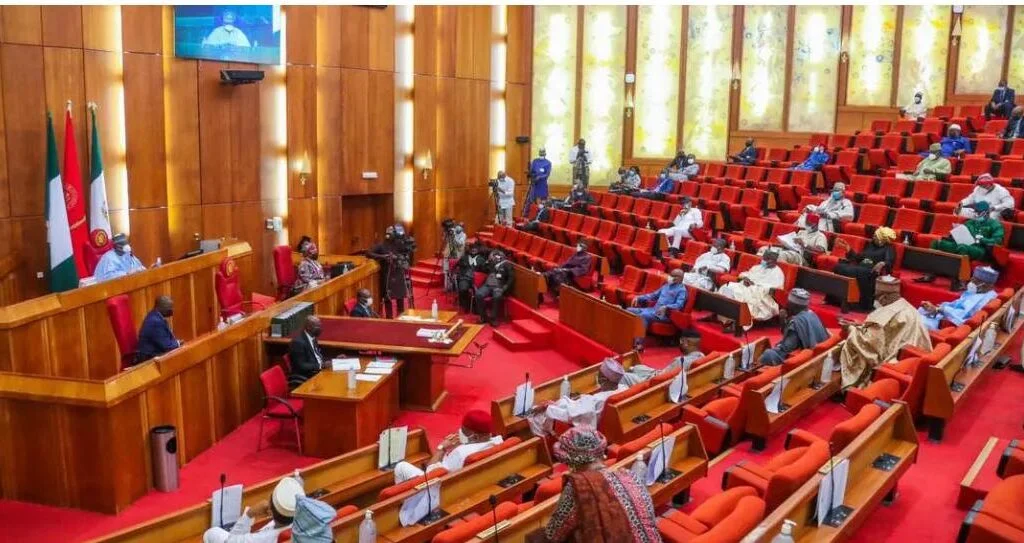
Senate to Meet IMF Officials Over Nigeria’s Economic Outlook and Reforms
Updated March 13, 2026
The leadership of the Nigerian Senate is expected to hold a high-level meeting with officials of the International Monetary Fund (IMF) to discuss Nigeria’s economic outlook and ongoing reform programmes under the administration of Bola Ahmed Tinubu.
The engagement forms part of the IMF’s Article IV Consultation with Nigeria, a routine review of the country’s economic policies and financial stability.
According to the Deputy President of the Senate, Barau Jibrin, the consultation exercise is scheduled to take place from March 4 to March 17, 2026, during which IMF officials will meet with key government institutions.
A notice sent to lawmakers revealed that the IMF specifically requested a high-level interaction with the Senate leadership as part of the consultation process.
“The Federal Office of Finance wishes to inform the leadership of the Senate and distinguished senators that, at the instance of the Federal Government of Nigeria, the International Monetary Fund Article IV Consultation in Nigeria has been scheduled to hold from March 4 to March 17, 2026,” part of the notice stated.
The meeting is expected to provide lawmakers with deeper insights into the government’s economic management strategy and explore possible areas where the IMF could support Nigeria’s reform agenda.
Economic Growth Outlook
Nigeria’s economic outlook for 2025 has been described by global financial institutions as gradually improving, though still fragile.
Both the International Monetary Fund and the World Bank noted that recent reforms and macroeconomic adjustments are beginning to stabilise the economy following periods of high inflation, exchange-rate volatility, and weak oil production.
For 2025, the IMF projected that Nigeria’s economy would grow by about 3.4 percent, reflecting modest improvements driven largely by increased activity in the non-oil sector.
However, challenges remain, including persistent inflation, fiscal pressures, and structural constraints in areas such as energy supply and infrastructure.
Stronger Growth Expected by 2026
Looking ahead, global institutions have expressed stronger optimism about Nigeria’s economic prospects.
The IMF has revised Nigeria’s growth forecast upward to about 4.4 percent in 2026, reflecting expectations that ongoing fiscal and monetary reforms will gradually strengthen macroeconomic stability and productivity.
Similarly, the World Bank projected that Nigeria’s economy could grow by around 4.4 percent in 2026 and 2027, potentially marking the country’s fastest expansion in more than a decade.
Economic growth is expected to be driven mainly by the services sector, particularly telecommunications and financial services, alongside increased contributions from agriculture and other non-oil industries as the country continues efforts to diversify its economy.