
Ovuoraye: Nigeria Must Expand Health Insurance Coverage Beyond 24 Million Enrollees
22nd November, 2026 | News
The Federal Government has unveiled plans to expand Nigeria’s health insurance coverage beyond its current 24 million enrollees as part of efforts to improve access to affordable healthcare across the country.
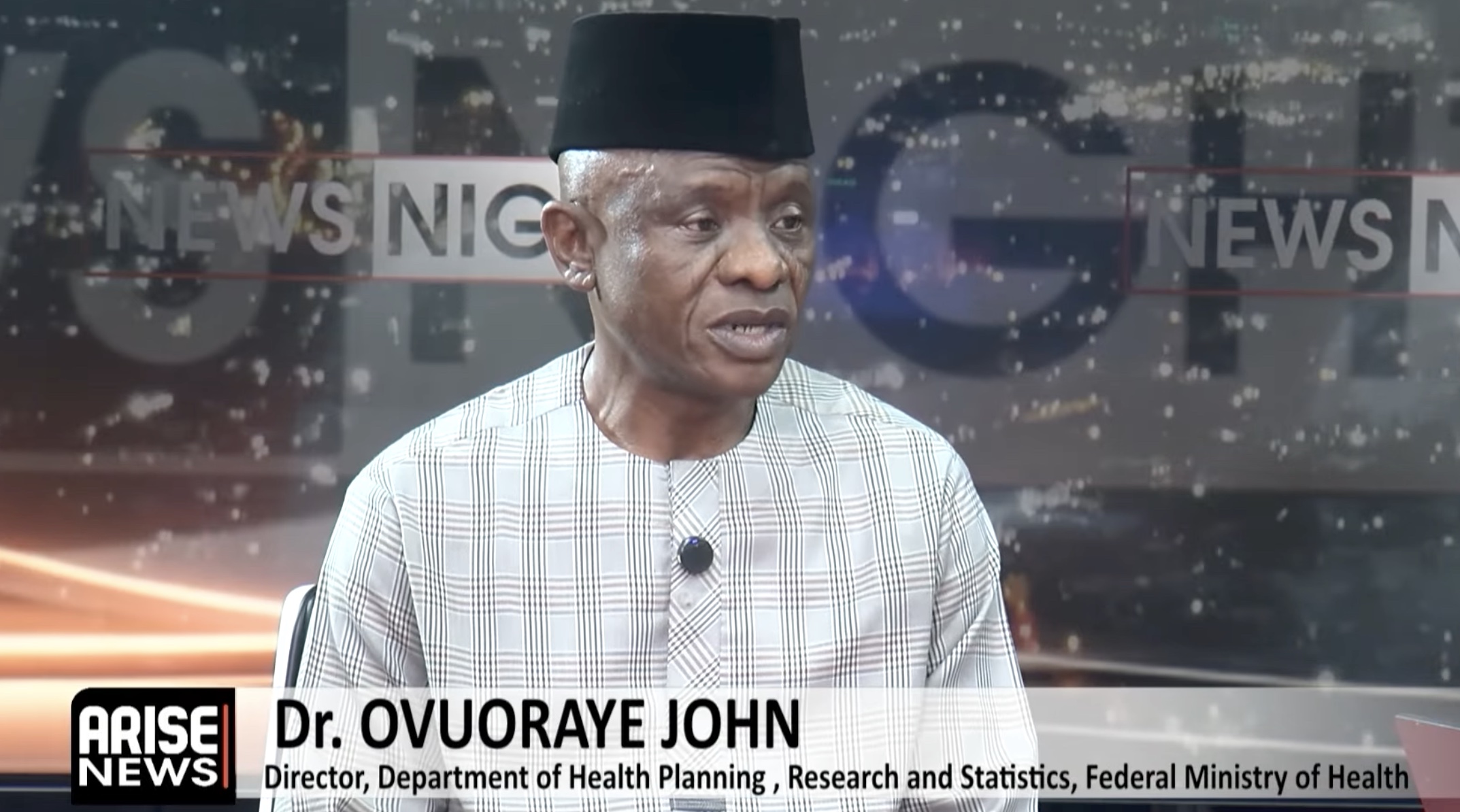
Dr John Ovuoraye, Director of the Department of Health Planning, Research and Statistics at the Federal Ministry of Health and Social Welfare, disclosed this during an interview on ARISE NEWS on Friday.
Ovuoraye explained that the country’s health insurance enrolment had increased from approximately 16 million to 24 million people, attributing the growth to healthcare financing reforms and interventions introduced by the President Bola Tinubu administration.
According to him, the government is working to address longstanding challenges affecting health insurance penetration, including population growth, large family sizes, inadequate public awareness and limited financial resources.
He said the government had identified gaps in the existing system and was repositioning the health insurance framework to accommodate more Nigerians.
Federal Government, States Strengthen Healthcare Financing
Ovuoraye identified increased collaboration between the Federal Government and state governments as one of the major strategies for expanding health insurance coverage.
He explained that President Bola Tinubu and the Nigeria Governors’ Forum had secured commitments from both levels of government to increase financial contributions towards healthcare delivery.
According to him, the arrangement requires the Federal Government and state governments to commit resources to healthcare financing, while states are expected to establish their respective health insurance schemes alongside the national framework.
He noted that the establishment of the National Health Insurance Authority had provided a framework for strengthening and expanding health insurance participation across the country.
However, Ovuoraye stressed that expanding enrolment would depend largely on the availability of adequate financial resources.
He explained that insurance coverage requires sufficient financial backing to ensure that enrolled individuals can access healthcare services when needed.
Public Servants to Be Brought Under Compulsory Health Insurance
The Health Ministry director also disclosed that the Federal Government was gradually making health insurance enrolment compulsory for civil servants and public servants.
He said efforts were underway to extend the arrangement to other organised workers as part of measures to reduce dependence on out-of-pocket healthcare payments.
Ovuoraye maintained that the government was introducing additional incentives to encourage wider participation in health insurance schemes.
He said the ultimate objective was to significantly reduce the financial burden Nigerians face when accessing medical services.
Basic Healthcare Fund to Support Expansion
The director further identified the Basic Health Care Provision Fund (BHCPF) as a major source of financing for expanding healthcare access.
According to him, the fund receives one per cent of the Federation’s Consolidated Revenue Fund and supports the revitalisation of primary healthcare centres across the country.
He explained that strengthening primary healthcare facilities was central to the government’s expansion strategy because it would enable more insured Nigerians to access essential medical services without making direct payments at participating facilities.
Ovuoraye also highlighted free healthcare and delivery services for women as part of the government’s interventions.
He disclosed that 172 local government areas were currently benefiting from the programme, adding that the government planned to extend the initiative to more communities.
He said the next phase would prioritise densely populated areas and communities facing significant maternal and newborn health challenges.
Government Targets Vulnerable Nigerians
Ovuoraye also revealed that the government was making efforts to extend health insurance coverage to vulnerable populations, including people in correctional facilities.
He explained that the broader objective was to ensure that more Nigerians could benefit from health insurance regardless of their financial circumstances or social background.
While acknowledging that Nigeria had yet to achieve its desired level of health insurance coverage, he maintained that the government was committed to expanding enrolment through improved financing, stronger partnerships with state governments and wider access to primary healthcare services.
He reiterated that although progress had been recorded, more work was required to ensure that a greater proportion of the population could access affordable healthcare without facing significant financial difficulties.
Source: Arise tv