
INEC’s Performance In Osun Election ‘Not To Be Applauded,’ Says Okonkwo
17th August, 2026 | News
Kenneth Okonkwo Criticises INEC Over Osun Election
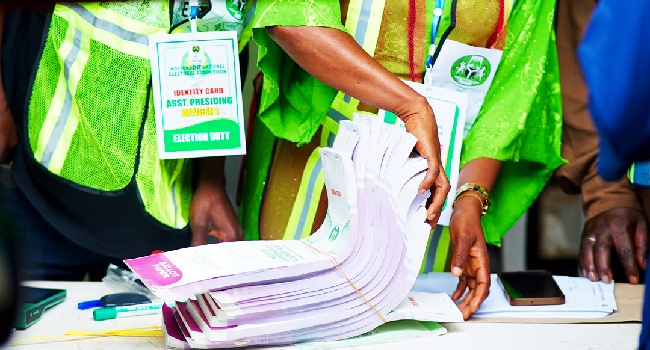
A chieftain of the African Democratic Congress (ADC), Kenneth Okonkwo, has criticised the Independent National Electoral Commission (INEC) over its handling of last weekend’s Osun State governorship election.
Speaking on Channels Television’s The Morning Brief on Monday, Okonkwo questioned why the uploading of election results to INEC’s Result Viewing (IReV) portal reportedly stopped around 8 p.m. on election day.
While acknowledging the outcome of the election, which saw incumbent Governor Ademola Adeleke secure another four-year term, Okonkwo said INEC’s performance should be subjected to scrutiny.
He questioned why the commission suspended the uploading of results and called on the electoral body to explain the reason for the delay, arguing that the development created uncertainty around the process.
Okonkwo also urged opposition parties to begin preparations for the 2027 general elections, maintaining that Nigeria’s electoral system still has significant challenges that must be addressed.
Adeleke, who contested under the Accord Party, was declared winner of the Osun election after securing 511,067 votes. His closest challenger, Bola Oyebamiji of the All Progressives Congress (APC), polled 444,815 votes, while ADC candidate Najeem Salaam finished third with 17,180 votes.
Despite the ADC’s third-place finish, Okonkwo described the party’s performance as commendable, noting that it contested without the support of state or federal government structures.
He also commended the people of Osun State for what he described as their resistance to intimidation and manipulation before, during and after the election.
According to Okonkwo, the election demonstrated that voters can influence political outcomes when they remain determined to defend their votes.
He further described Adeleke’s victory as evidence that the power of the electorate can outweigh the influence of those holding political office.
Okonkwo said the outcome could also serve as an important lesson ahead of the 2027 elections, particularly regarding the need for voters and opposition parties to remain vigilant and defend the integrity of the electoral process.
He maintained that strengthening Nigeria’s electoral system would require greater transparency, accountability and public confidence in the conduct and management of elections.